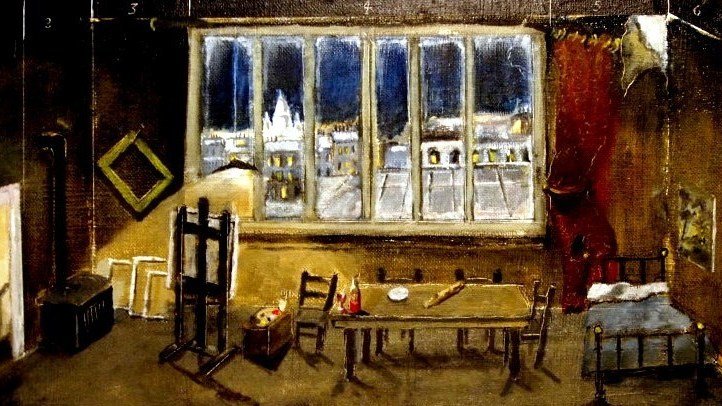
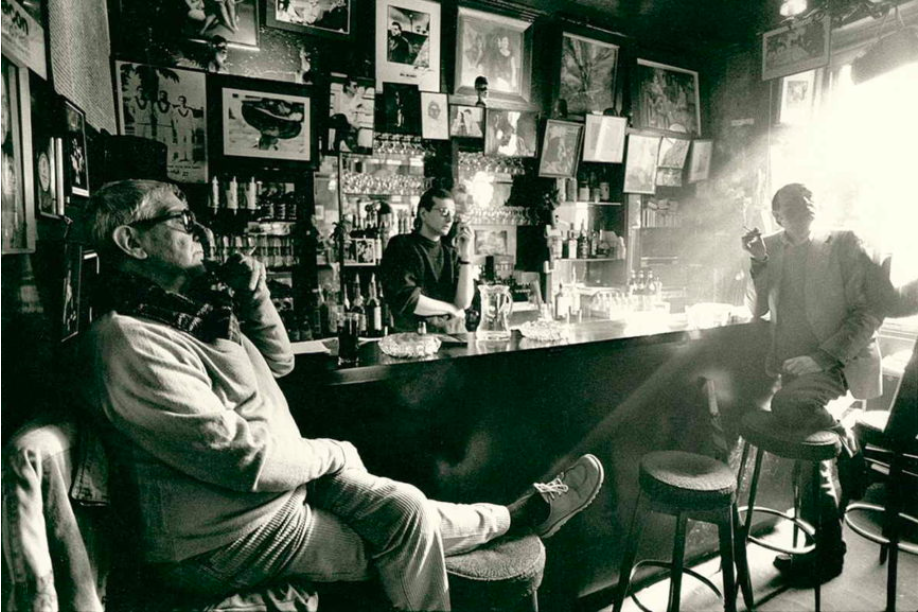
Bohemianism is the practice of an unconventional lifestyle, often in the company of like-minded people and with few permanent ties. It involves musical, artistic, literary or spiritual pursuits. In this context, Bohemians may or may not be wanderers, adventurers, or vagabonds.
This use of the word bohemian first appeared in the English language in the 19th century to describe the non-traditional lifestyles of marginalizedand impoverished artists, writers, journalists, musicians, and actors in major European cities.[
Bohemians were associated with unorthodox or anti-establishment political or social viewpoints, which often were expressed through free love, frugality, and—in some cases—voluntary poverty. A more economically privileged, wealthy, or even aristocratic bohemian circle is sometimes referred to as haute bohème[2] (literally “high Bohemia”).[
The term bohemianism emerged in France in the early 19th century when artists and creators began to concentrate in the lower-rent, lower class, Romani neighborhoods. Bohémien was a common term for the Romani people of France, who were mistakenly thought to have reached France in the 15th century via Bohemia (the western part of modern Czech Republic).
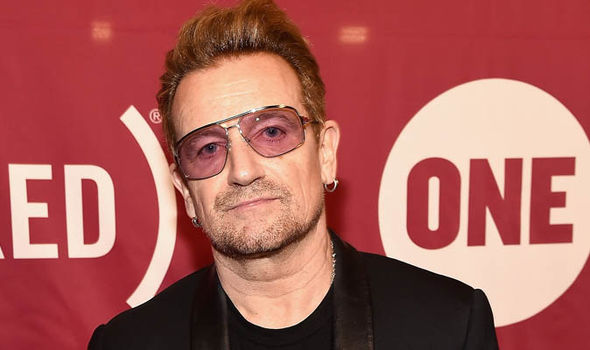
U2 frontman Bono has said that capitalism is “not immoral” while speaking at the World Economic Forum in Davos, saying it’s “taken more people out of poverty” than any other system.
The social activist urged global business leaders to join the fight against extreme poverty in Africa and Aids on a panel debating how to end global poverty by 2030 – a UN goal.
“Capitalism is not immoral – it’s amoral. It requires our instruction,” Bono said, adding: “Capitalism has taken more people out of poverty than any other ‘ism’. But it is a wild beast that, if not tamed, can chew up a lot of people along the way.”
The musician said that unfettered capitalism has caused an international drive towards populism and that public-sector spending is more vulnerable than ever due to issues such as homelessness in European cities.
“We have to have some humility about what we can achieve in the private sector but if we can unlock it it’s amazing what you can pull off,” before issuing a warning: “If Africa fails, Europe cannot succeed.”
Bono is a co-founder of One, which is a global campaign organisation with more than 10m members seeking to end extreme poverty.
We can all learn something from these historic figures.
BY MATTHEW DEKNEEF
The halls of Hawaii’s history are filled with examples of powerful and inspirational wahine (women) who made progressive steps for women’s, indigenous and minority rights across the Hawaiian Islands. Their actions and achievements also instilled pride in culture and identity, regardless of gender. Adding to our list of “14 extraordinary women in Hawaii’s history,” here are more equally remarkable figures who were steadfast in their causes, unafraid to challenge the status quo and stand up for what they believe in.
1. Iolani Luahine
Photo: Francis Haar
Regarded as the 20th century’s foremost authority and representative on the ancient art of hula, Iolani Luahine was a world famous dancer with an unmatched mastery of this nearly lost cultural tradition. The “high priestess of hula,” as she’s often deemed, is remembered for not just her magnetic presence and artistry as a dancer, but instruction and revival of hula kahiko, the traditional oral heritage of hula passed down for generations.
After opening her own Honolulu halau (hula school) in 1947, Luahine trained over 300 students in the ancient rituals, chants, authentic instrumentation and proper production of appropriate costumes for hula that was passed down to her—all this during a time when Hollywood was reducing the sacred dance into something merely for entertainment. In 1969, Luahine hosted a pivotal meeting, at the onset of the Hawaiian Renaissance, with the Islands’ most knowledgeable kumu hula (hula teachers) and dancers in Nanakuli, Oahu to demonstrate the need for organizations committed to preserving and perpetuating Hawaiian culture as it pertained to hula. In doing so, she reignited an awareness for the dance’s complexities and historical importance for the Hawaiian people.
Soon thereafter, a Hawaii state-run council was underwritten to teach the old ways of hula to a new generation of pupils. As a result, some of today’s most respected hula teachers in Hawaii attended these very first workshops.
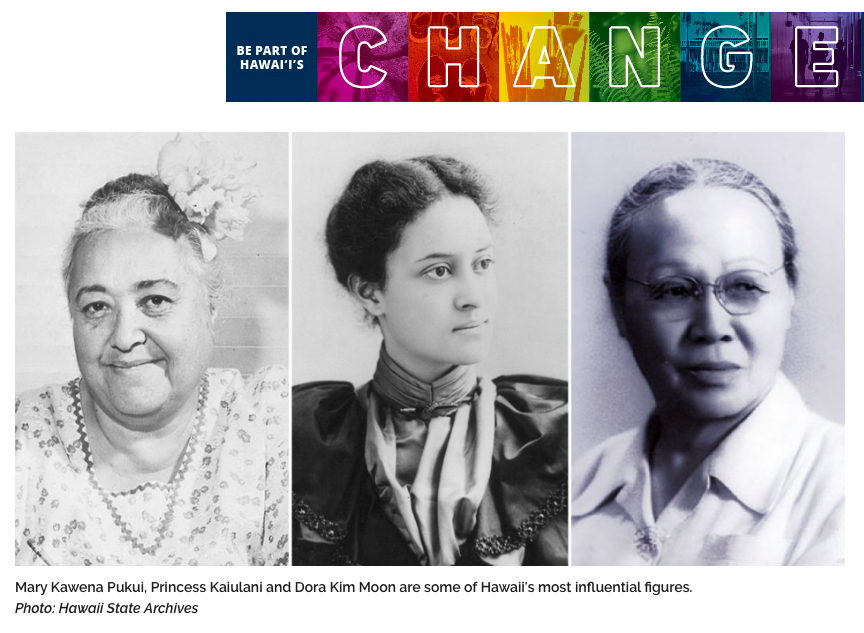
2. Princess Kaiulani
Photo: Hawaii State Archives
Victoria Kawekiu Lunalilo Kalanikuiahilapalapa Kaiulani Cleghorn was destined to rule the Islands—the princess, who might have become queen, was named heir to the throne by Queen Liliuokalani when she was just 15 years old. Princess Kaiulani was celebrated by Hawaii’s citizens upon her birth (bells rang out at 4 o’clock in the afternoon on October 16, 1875 to announce her) and, in her teens, became an avid surfer and expert equestrian. She was eventually sent to England for schooling, where she became highly educated in the arts and fluent in several languages, all to prepare her for her royal duties.
It was during these formative years when she was informed of the illegal overthrow of the Hawaiian monarchy. While detached from her Islands, her love for its people was unwavering. She immediately traveled to Washington D.C. to urge President Grover Cleveland to restore the Hawaiian monarchy and defend Liliuokalani’s name and honor—a historical moment for which she’s best remembered. Princess Kaiulani passed away from cardiac rheumatism at just 23 years old and was deeply mourned.
3. Donnis Thompson
Photo: University of Hawaii
Dr. Donnis Thompson, the former University of Hawaii women’s director of athletics, was a champion for female athletes in Hawaii and helped lay the foundation for the university’s now thriving women’s sports program. She was the university’s first women’s track and field coach, a program she started in 1961. By 1972, she was heading the entire athletics program, turning the then-two sports offered to female students into a catalog of eight, multiplying the meager number of women’s athletic scholarships to 30 and notably pushing its women’s volleyball team, the Rainbow Wahine, into the national spotlight. She eventually went on to become the first woman to serve as Superintendent of Education for the state of Hawaii. A sculpture of Thompson, who passed away in 2009, sits at the Stan Sheriff Center.
4. Isabella Sinclair
Isabella Sinclair was the author and illustrator of the first color picture book of Hawaiian flowering plants, “Indigenous Flowers of the Hawaiian Islands,” published in 1885. Not a trained botanist, it was considered a notable achievement of the time for including both their Hawaiian and botanical names, the seasons they blossomed and their natural habitats, many of which she observed on the islands of Niihau and Kauai that had little textual documentation and threatened by extinction. The book featuring her original watercolors was eventually peer reviewed by the “Journal of Botany.” Sinclair, who made her home in 1863 in Hawaii, was wise to consult knowledgeable native sources for the book, speaking with elderly Native Hawaiians on Niihau and Kauai in particular, to obtain reliable information about their differing names in different island districts. She dedicated the book in its introduction: “To the Hawaiian Chiefs and People who have been most appreciative friends, and most lenient critics, this work is affectionately inscribed.”
5. Princess Ruth Keelikolani
Photo: Hawaii State Archives
Princess Ruth Keanolani Kanahoahoa Keelikolani, known simply as Princess Ruth, was a steadfast figure in Hawaii’s history, who clung to her Hawaiian identity during an era of much change and transition in values. While educated and taught to read and write by missionaries, customary of a chiefly upbringing at the time, Ruth refused to speak English and only spoke in Hawaiian. She also was adamant against personally converting to Christianity or to even travel outside the Islands she called home, a conviction that brought about the ire of many Christian missionaries and non-Hawaiian politicians. Despite her reputation in those circles, she was summoned by a Hawaiian council in 1881 to Hilo, Hawaii Island where a lava flow threatened to destroy the town of Hilo to appease the volcano goddess Pele. Ruth sailed to Mauna Loa and it’s chronicled in the ship captain John Cameron’s account that she prayed and made sacrifices to Pele, standing in the lava’s path. That day, the flow stopped and refrained from destroying the town. When she returned to Honolulu, she was greeted by a crowd at the docks for her heroism.
Her contributions to Hawaii today is traced to her will; Ruth, who inherited the vast landholdings of Kamehameha the Great, left her massive estate to Princess Bernice Pauahi Bishop, her cousin and best friend. Through Pauahi, that estate would ultimately become the Kamehameha Schools, a school for the advancement of Native Hawaiian children.
6. Tai Heong Kong Li
Dr. Kong (sitting, left). Photo: Sailing for the Sun – The Chinese in Hawaii
Tai Heong Kong Li was the first woman to practice Western medicine in Hawaii. Demure in size (she was just under 5 feet in height and weighed 85 pounds) and an orphan, Li became the top student of her orphanage in China which led to a scholarship at the Canton Hospital Medical School. At 21 years old, it was here she met a fellow student that would become her husband and the two immigrated to Hawaii as doctors. Not fluent in English, Dr. Kong appealed to Sanford B. Dole, the president of the newly made Republic of Hawaii, with the help of a Cantonese translator to receive an official license. Despite her education abroad, she was made to take an all-day comprehensive oral examination before four Western doctors. Unsurprisingly she passed and was issued her license to practice medicine and surgery in the Islands.
Dr. Kong was remembered for personally going door to door to treat patients and she delivered more than 6,000 babies of all races across Oahu. She was also the president of both the Chinese Church’s Women’s Society and the Honolulu Chinese Orphanage Society, among other titles. Dr. Kong passed away at 76 in 1951. Several of her grandchildren and great-grandchildren are practicing doctors today.
7. Helen Lake Kanahele
Helen Lake Kanahale is heralded as one of the first women labor leaders in Hawaii. She was deeply involved with the United Public Workers and became the elected president of the International Longshoremen and Warehousemen’s Union Women’s Auxiliary, passionately protesting for the rights and wages of union workers. One of her major campaigns in the 1950s was working to amend the Organic Act, which would allow women to serve on juries in the Territory of Hawaii.
Kanahele lived and raised her family in a Hawaiian homestead house in Papakolea, Oahu, and became a vocal proponent on behalf of homesteaders and their issues. She’s described by colleagues of the time as courageous and difficult to intimidate; her public affiliations with union causes, beliefs against capital punishment and pro-world peace statements made her a target of the Territorial Committee. In 1954, she was subpoenaed to appear before them for her “subversive” behavior, where she refuted under oath multiple times that she was not a member of the Communist Party, and stood by all her statements as beliefs she came to on her own accord. The interrogation left her undeterred and she recruited even more members for the UPW, serving in positions from territorial secretary-treasurer to board member of its political action committee. She was also incredibly charismatic and notable for breaking into mixed organizations often run and dominated at the top by men, who respected and accepted her leadership on their issues.
8. Haunani-Kay Trask
Photo: Ulukau
Haunani-Kay Trask is a Native Hawaiian academic, activist and influential figure in the Hawaiian sovereignty movement Ka Lahui Hawaii, the largest in the Islands. She was the first full-time director of the Center for Hawaiian Studies at the University of Hawaii at Manoa, serving in the position for 10 years. Unafraid of criticism, her incisive rhetoric and impassioned oratory character made her at times a controversial figure (“I am not soft. I am not sweet,” she once responded to an undermining claim that her approach was too abrasive and “un-Hawaiian”) at the center of a much-needed intellectual discourse on issues surrounding native land rights, institutional racism and sexism in Hawaii. Also a poet, Trask brought politics into the core of her poetry collections “Light in the Crevice Never Seen” and “Night is a Sharkskin Drum,” and penned the provocative book of essays “From a Native Daughter: Colonialism and Sovereignty in Hawaii.”
9. Morrnah Nalamaku Simeona
Photo: YouTube
Morrnah Nalamaku Simeona is a Hawaiian healer known for reinterpreting the hooponopono, an ancient Hawaiian reconciliation process, into the modern day version recognized around the world. Formerly a lomilomi massage practitioner (and to a famous visiting clientele to the Islands—Lyndon B. Johnson, Jackie Kennedy and Arnold Palmer to name a few), Simeona descends from a lineage of Hawaiian healers; her mother was a kahuna laau kahea (healer through prayers and chants). In 1976, at 63 years old, Simeona began to adapt the hooponopono practice for an international contemporary audience and as a self-help exercise for the individual, presenting her method to the United Nations and around the globe.
10. Rosalie Keliinoi
Photo: Honolulu Magazine
Rosalie Enos Lyons Keliinoi was Hawaii’s first elected woman legislator in the Territory of Hawaii. In 1925, Keliinoi made a successful Republican bid to represent the island of Kauai in the territorial house, introducing bills that empowered women in public life. Notably she proposed and passed landmark pieces of legislation that still stand in the books of Hawaii Revised Statutes: Act 274, which gave married women the right to sell, without the consent of their husbands, property they brought into the marriage; Act 31, designating funds for programs to promote the welfare of pregnant women; and, Act 51, authorizing the territorial government to purchase, restore and turn over Hulihee Palace, a historic summer home in Kailua-Kona to the Daughters of Hawaii for use as a museum. It remains open to visitors who enjoy viewing its priceless koa furniture and artifacts.
11. Dora Kim Moon
Photo: Distinctive Women in Hawaiian History Program
Dora Kim Moon was an integral Korean community organizer in Hawaii and a pillar of the Korean women’s movement in the Islands during its territorial, and later, statehood years. A few months after immigrating from Pyongyang, Korea, Moon organized a small prayer group near Honolulu Harbor that eventually became the First Korean Methodist Church; four decades later it would grow to more than 400 members. A vocal proponent during an era where it wasn’t the norm for a woman, let alone a minority immigrant, Moon is remembered by her granddaughter as “such a strong person. In church you could see her standing with the men. They respected her convictions. My family often said, ‘Grandmother should have been a man!’” During that time, Moon devoted herself to a variety of women’s causes, organizing the Korean Women’s Club and Korean Women’s Relief Society whose social activism gave support to Koreans abroad occupied by Japanese military during World War II.
12. Emma Metcalf Nakuina
Photo: Hawaii State Archives
Emma Kailikapuolono Metcalf Beckley Nakuina is a highly regarded authority on Hawaiian water laws and unofficially considered Hawaii’s first female judge. A descendant of alii (chiefs), Nakuina became an esteemed figure to the court of Kamehameha IV because of her understanding of laws governing the traditional distribution of water in Hawaii—a “custodian of the laws of the Kamehamehas.” Her published works on the subject, notably “Ancient Hawaiian Water Rights and Some Customs Pertaining to Them,” have become a standard reference and primary source to this day. Her 18-year service as a judge and commissioner of private ways and water rights spanned Hawaii’s many transitions, from kingdom to republic to a territory of the U.S. In retirement, she became one of the Hawaiian Historical Society’s first female members and stayed active with the Daughters of Hawaii, a civic organization.
13. Annie Fox
Photo: archives.gov
Annie Fox was the first woman to be awarded the Purple Heart for combat following her service as the head nurse at Hickam Field’s Station Hospital during the attack on Pearl Harbor in 1941. In the aftermath, Fox “administered anesthesia to patients during the heaviest part of the bombardment, assisted in dressing the wounded, taught civilian volunteer nurses to make dressings, and worked ceaselessly with coolness and efficiency, and her fine example of calmness, courage and leadership was of great benefit to the morale of all with whom she came in contact,” read the citation upon the Purple Heart’s presentation to her a year later. When the criteria for the Purple Heart was changed thereafter (it’s reserved for those wounded by enemy combat), Fox was awarded, in lieu of the Purple Heart, the Bronze Star, another prestigious military recognition.
14. Kini Kapahu Wilson
Photo: University of Hawaii Press
Kini (Jennie) Kapahu Wilson made her most significant strides for women’s rights in 1919 as the wife of the appointed Honolulu mayor, John Wilson. A hula dancer for King Kalakaua-turned-public servant, Wilson, or Jennie, as she was known, organized what’s considered “the first meeting of women in the territory to discuss the new sphere of womanhood” that the 1920s suffrage movement ushered in. She was also a favorite personality within the Democratic Party and was acknowledged as Hawaii’s “Honorary First Lady.” Wilson valued the opportunities her husband’s political position afforded her as a female ally; she once told the press she wanted him to stay in public office as long as he could just so she could “kick some shins.”
15. Mary Kawena Pukui
Photo: Wikipedia Commons
Mary Kawena Pukui was a Hawaiian scholar, practitioner and cultural pioneer whose published works are considered a cornerstone in the active preservation and perpetuation of the Hawaiian language and diverse fields of Hawaiian studies. Born shortly after the overthrow of the Hawaiian monarchy, Pukui would publish invaluable resources, references and translated manuscripts including the definitive “Hawaiian Dictionary – Hawaiian-English, English-Hawaiian,” “Place Names of Hawaii” and “Olelo Noeau,” a collection gathering 3,000 Hawaiian proverbs and poetical sayings; all three considered to be the unequivocal authorities in their subjects.
The juggernaut legacy of the two-volume set, “Nana I Ke Kumu, Look to the Source,” provides an immense understanding of Pukui’s contributions, covering Hawaiian concepts and belief systems through the anthropological and personal lens of a Native Hawaiian. A wealth of knowledge on the oral traditions of Hawaiian culture, Pukui’s unparalleled accumulation of unpublished notes spanning over 50 years are currently held at the Bishop Museum on Oahu.
According to a study by the National University of Singapore, seniors who eat more than two standard portions of mushrooms per week may be 50% less likely to suffer mild cognitive impairment.
The study was conducted from 2011 to 2017 and published on Tuesday March 12.
The effect is thought to be down to ergothioneine, an antioxidant and anti-inflammatory humans can’t synthesise independently.
It’s common knowledge that mushrooms are packed with a nutritional punch — but did you know that this everyday food item may be able to lower the risk of cognitive decline in older people too?
According to a study by the National University of Singapore (NUS), seniors who eat more than two standard portions of mushrooms — equivalent to 300g or half a plate — per week may have 50% reduced odds of having mild cognitive impairment.
This could be because of the presence of a specific compound called ergothioneine found in almost all mushroom varieties, according to Dr Irwin Cheah, senior research fellow from NUS Biochemistry.
Dr Cheah said: “ET (ergothioneine) is a unique antioxidant and anti-inflammatory, which humans are unable to synthesise on their own. But it can be obtained from dietary sources, one of the main ones being mushrooms.”
The NUS study stated that seniors with mild cognitive impairment display subtle symptoms of memory loss or forgetfulness, as well as a deficit in other cognitive functions such as language, attention, and visuospatial abilities.
The study was conducted from 2011 to 2017 and published on Tuesday March 12. It referenced six commonly consumed mushrooms — namely golden, oyster, shiitake and white button mushrooms, as well as dried and canned mushrooms.
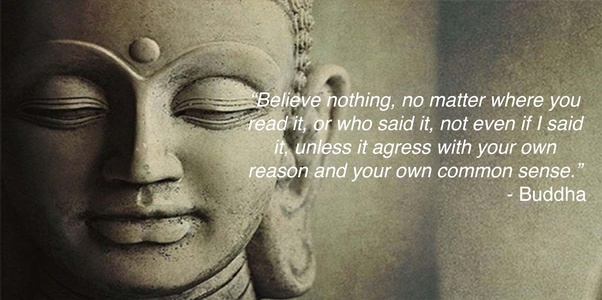
Siddhartha, who later became known as the Buddha – or The Enlightened One – was a prince who forsook the comforts of a palace to seek enlightenment. He realised the essential unreality of the world and experienced the bliss of Nirvana. After his enlightenment, he spent the remainder of his life teaching others how to escape the endless cycle of birth and death.
Daibutsu Buddha Kamakura, Japan Buddha was born approximately 400 BCE in the area now known as Nepal. He was brought up in a palace with all the comforts and luxuries possible. Growing up a young noble prince, it is said his father sought to shield the young prince Siddhartha from the pain and suffering of the world. It is said his father had a premonition that Siddhartha would one day renounce the world.
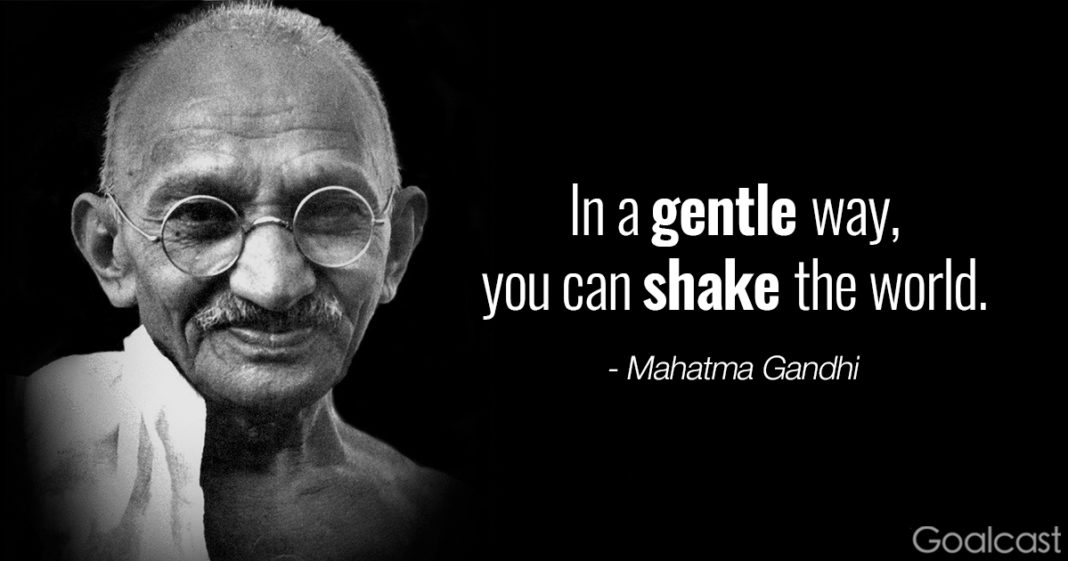
Revered the world over for his nonviolent philosophy of passive resistance, Mohandas Karamchand Gandhi was known to his many followers as Mahatma, or “the great-souled one.” He began his activism as an Indian immigrant in South Africa in the early 1900s, and in the years following World War I became the leading figure in India’s struggle to gain independence from Great Britain. Known for his ascetic lifestyle–he often dressed only in a loincloth and shawl–and devout Hindu faith, Gandhi was imprisoned several times during his pursuit of non-cooperation, and undertook a number of hunger strikes to protest the oppression of India’s poorest classes, among other injustices. After Partition in 1947, he continued to work toward peace between Hindus and Muslims. Gandhi was shot to death in Delhi in January 1948 by a Hindu fundamentalist.
“Whatever our dreams, ideas, or projects, we plant a seed, nurture it—and then reap the fruits of our labors.” – Oprah After more than 20 years of friendship, Oprah and her favorite health expert, Bob Greene, are taking their love of nourishing foods back to its roots—by rolling up their sleeves, tilling the soil, and sharing one heck of a beautiful bounty.
“Being on Maui and creating a farm feels like coming home to me.” —Oprah
Oprah’s farm is situated at almost 4,000 feet elevation on the side of Haleakala, a dormant volcano, where it gets consistent rainfall and plenty of sun.
“Rich, fertile soil helps the plants give you the nutrients you need to thrive.” —Bob Greene Oprah’s so-called baboon-butt radishes grow large and vibrant in the farm’s healthy soil. A compost heap full of nutrient-rich table scraps and plant clippings will be recycled right back into the earth. Read more: Oprah’s Garden
Despite Hawaii’s lush farming conditions, roughly 90 percent of its food is imported from the mainland.
Green Zebra, Black Prince, and Burbank Slicing tomatoes (wrapping in paper speeds ripening) are among the more than 100 species of fruits, vegetables, and herbs growing on the farm.
Russell Brand arrives at GQ Men of the Year Awards, on Tuesday, September 3rd, 2013 in London. (Photo by Joel Ryan/Invision/AP Images)
We can together, unravel the matrix of modern media and reveal the gleaming reality beyond connecting us all to each other through pure consciousness. Or it’s true news. Trews. Before long we will dismantle traditional media, the machinery of capitalism and duplicitous pseudo democracy and realise humankind’s true (trew) potential as spiritual beings that manifest our own physical destiny. Also I do voices. And sing my own theme tune. After The Revolution The Trews will be Fox News.
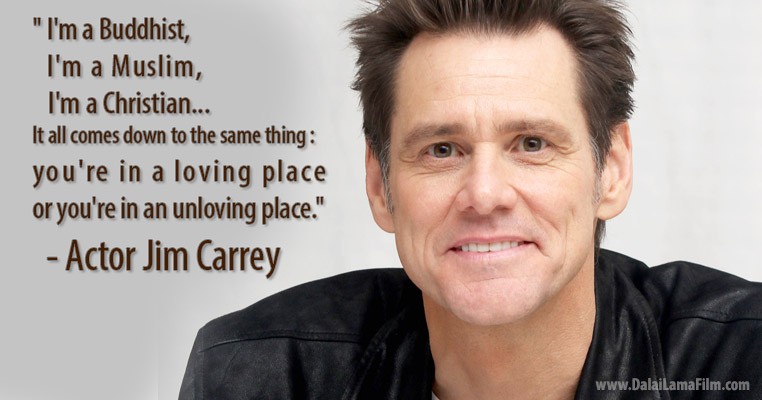
We are lucky enough to be witness to an age of enlightenment in which people across the globe have been slowly coming closer to their spirituality. Many famous personalities have come out in the open and are working hard to help mankind with all the resources they have at their disposal. Within this group, there are many who have spoken about their own path towards enlightenment. One of these people is Jim Carrey.
Everyone remembers Jim Carrey and his marvelous knack for comedy from his work in movies like ‘The Mask’, ‘Bruce Almighty’, and ‘Ace Ventura’. But besides his comedic side, he is also an incredibly truthful, spiritual and enlightened person and it would benefit everyone to listen to what he has to say. A couple years ago, he began detailing his experiences at various events across many countries, recordings of which can be found on YouTube.
Carrey was inspired to become a comedian by his father, Percy Carrey. According to Jim, Percy Carrey had all the potential to become a wonderful comedian but he decided to play it safe which is why he settled for becoming an accountant. Unfortunately, the safe choice failed him and he was laid off when his son turned twelve. The family fell on hard times but young Jim Carrey learned that life has many pitfalls and it is much better to take the risk and do something that you are truly passionate about.
By the time he turned 28, Carrey had already worked in comedy for ten years. On the night, when he was in Los Angeles, he had an epiphany. He realized that his highest purpose was to help people forget about all their worries and sorrows, just like his father had wanted to do. And so he strove to become a person that others could easily reveal the best version of themselves too.
Carrey advices those who are just starting out to ask themselves what good they can do for the world using their abilities. It is the effect that we have on people that really matters because characters and disguises are not permanent, but our true selves are. The peace that we are all looking for exists in a realm that is far beyond who we are, who society expects us to be, and any masks that we can come up with. We can choose to conform and play along with societal expectations but we will only be able to find real peace when we can pull down the walls we’ve all built for protection around ourselves.
“Your need for acceptance can make you invisible in this world. Don’t let anything stand in the way of the light that shines through this form. Risk being seen in all of your glory.” ― Jim Carrey
This is because we’ve successfully extinguished the unique ray of light that shines within each and every person. It is our duty to let that light shine as bright as possible. Carrey has repeatedly stated that he hopes people will get all that they desire in terms of material wealth so that they finally understand that money, in fact, cannot buy you the peace you are looking for.
Janie’s Fund is dedicated to providing resources to help put the pieces back together again for abused girls. Each year in our country, more than 68,000 children are raped or sexually abused. The number of girls experiencing this devastating trauma before the age of 18 is a staggering 1 in 5. This MUST change.
Steven Tyler created Janie’s Fund in partnership with Youth Villages to bring hope and healing to girls who have suffered the trauma of abuse and neglect.











 Sketches of Spain (And Other Things)